I Remember… An Account of the Weissenberg Family's Escape from Nazi Germany (Grandma Eva's Story)
An account of the Weissenberg family’s escape from Nazi Germany, as told to Sandy Barton by Eva (Weissenberg) Kohn.
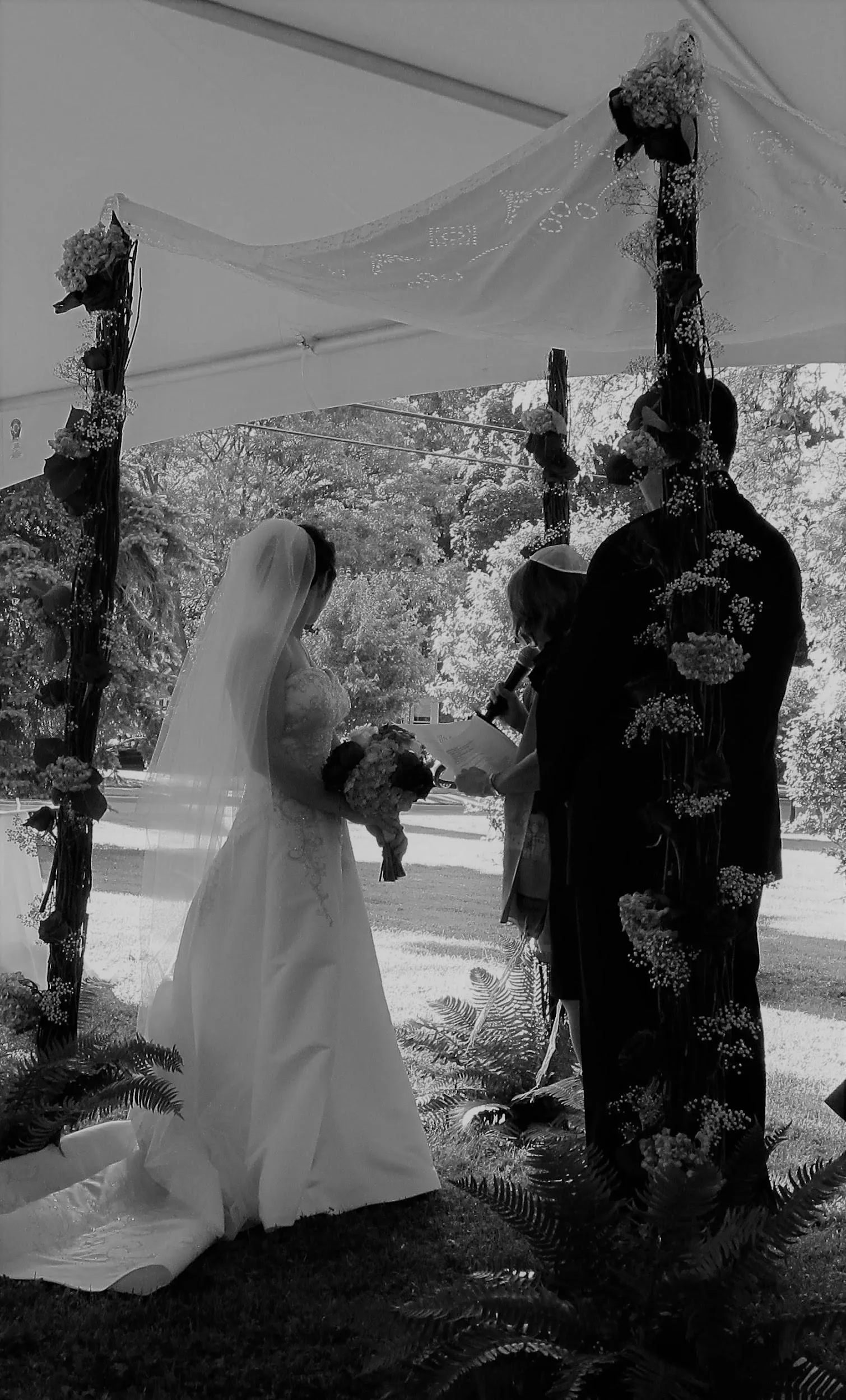
On a brilliant June day, my son married the love of his life. I watched. I listened. I hoped.
They stood under a pure white chuppah and exchanged vows. I watched as they smiled at one another. I listened as the rabbi spoke sacred words and thoughtfully explained each part of the ceremony for many of us non-Jewish folks who were learning right along with my son. I hoped that their life together would be a happy, healthy and gentle one.
Sitting not far from me was the bride’s Grandma Eva, a beautiful woman of 90. We had met only once before, but from that first meeting I had a sense she was a strong, independent, confident woman. I wanted to get to know her better.
The wedding weekend was densely packed with parties, ceremonies, eating and dancing … not terribly conducive to sitting down for a one-on-one chat. Our conversation had to wait for another time.
Unfortunately, my next trip to Michigan was for the funeral of Eva’s husband, Ted. It was a time for family, for memories and for gathering. I learned about the ritual of sitting shiva, and was honored to pay a condolence call to Eva.
She was so gracious and was eager to show me around her beautiful apartment. As we walked down the hallways, Eva pointed out artwork and photographs. It seemed everything had a story, an interesting one. But the one that took my breath away was the story she told as we sat at her small table - just the two of us - while members of her family sat in another room.
I was captivated, stunned and brought to tears as I listened. She patted my hand and said in her very matter-of-fact way, “Why are you crying? This is not sad. It’s a good story. It’s a good story.”
In the seven years since we sat at that table, I have revisited her story time and time again. It still intrigues me, it still begs to be saved, and to be shared. So, after a delightful series of phone calls, and Eva’s patience with answering a barrage of questions, I have written about her early years. My hope is that I can do justice to the honor, courage, devotion, friendship and risk reflected in Eva’s story. I also hope that it will be shared in the years to come, with great-grandchildren and great-great grandchildren whose lives will be better, because of the sacrifices of many. It is a good story amidst a flood of tragic ones. It is my great honor to be able to share it.
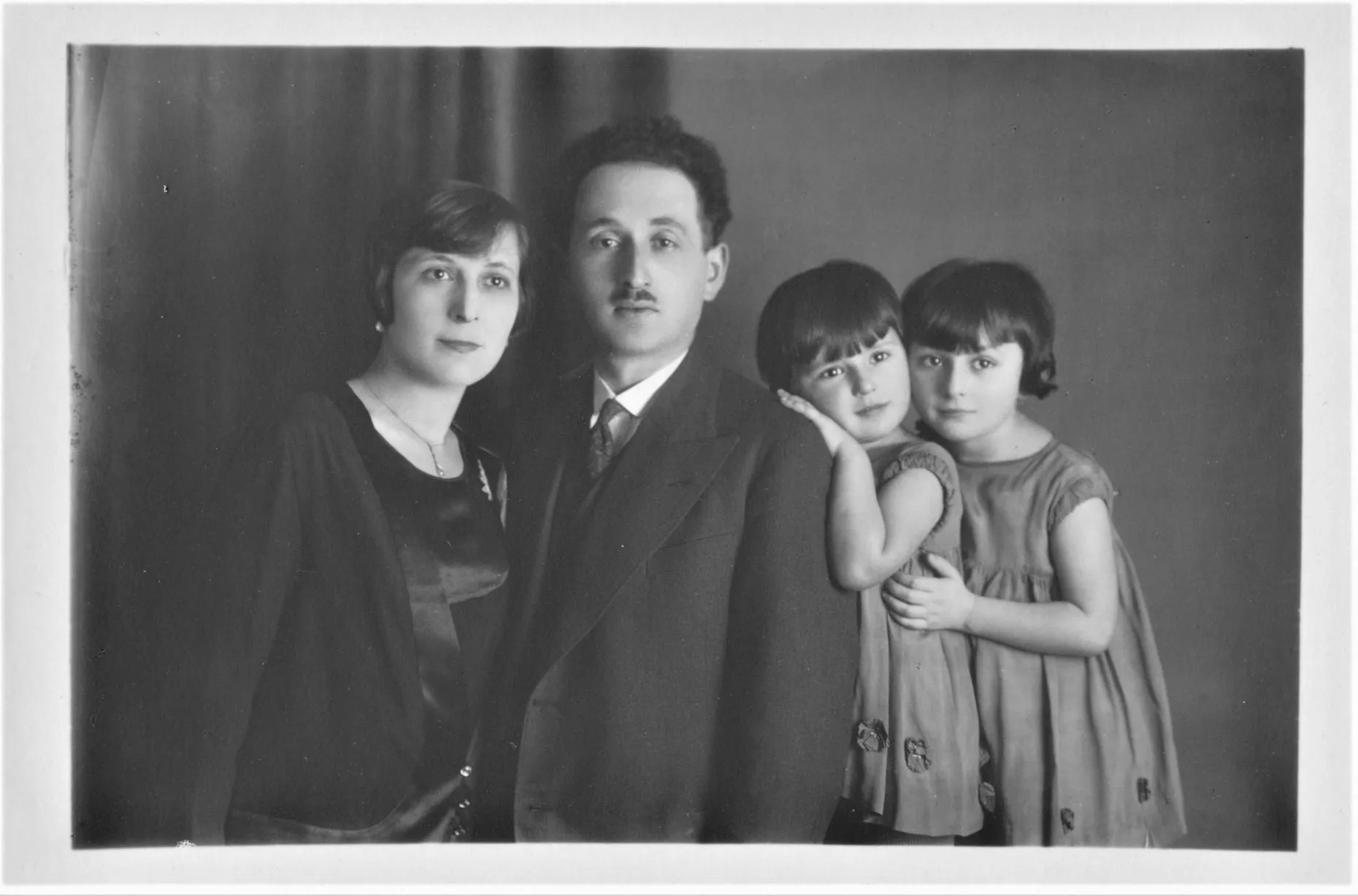
Eva (Weissenberg) Kohn was born in Berlin on June 28, 1924 to Rebeka and Berl Weissenberg. Within the family, Rebeka was known as “Gina” (pronounced GHEE-na).
While born in Germany, Eva was actually considered a Polish citizen, because according to German law, children shared the citizenship of their parents.
For the first thirteen years of her life, Eva lived in Berlin with her mother, father and sister, Irene, who was older by 11 ½ months.
Berl’s parents Chaim and Tamar, Eva’s Oma and Opa, were the only grandparents she ever knew.
Rebeka’s mother died when Rebeka was only 13. Her father later remarried, but Eva never met him. He was a learned man who earned a meager living as a scribe, writing Torah scrolls which he sold to synagogues. His work was done with ink and quill on parchment paper, never with any form of decoration on the scrolls. As Eva explained, “The word of God was sufficient.”
The Weissenbergs began poor, and their first apartment reflected their modest beginnings. They had what they needed and what they didn’t have, no one else had either.
During this time, there was a great need for recycled wool. Military uniforms accounted for much of the demand, and Berl seized the opportunity to make it a profitable endeavor, by starting a wool-baling shop.
Berl and Rebeka worked with a few men in the shop.
Together they would sort the woolen articles that people had dropped off and that the rag men collected. Sorting was the first, and most important step in the baling process. Items were sorted according to the various grades of wool, and subsequently baled to be sent off for recycling. It was hard work that her parents enjoyed. They were good at it.
This was a difficult time to own a business in Germany. The country was facing high levels of inflation as a result of massive government debt after World War I. In order to pay workers, the government simply printed more bills. The more money that was printed, the less value it had, and the more prices continued to rise.
Eventually hyperinflation took hold. A loaf of bread, which cost DM 250 in January 1923, had risen to DM 200,000,000,000 in November 1923. At one time, DM 4,000,000,000 was only equivalent to one US dollar.
Eva may have been a young girl, not quite a teen at the time, but she was old enough to understand how hard her parents had to work to make a go of it.
In talking with Eva about her father and mother, I soon realized the great respect and admiration she had for them. She talked with pride about her father’s intelligence and his acute awareness of the business climate. His outgoing personality made him a friend to many, and his honesty made him a man people trusted without hesitation.
Everyone agreed that Berl Weissenberg had all the characteristics of a successful businessman. He drove a hard bargain, but as Eva said, “When he shook your hand, you could believe you had a deal.” Berl was friendly, and when work was done, he’d be more than willing to sit down and have a beer with anyone.
Berl was also careful with the money he earned - very careful. I had to smile when Eva gave me an example.
There Eva was, three or four years old, walking with a friend in Berlin. As she attempted to cross the street, she was hit by a car and injured her arm.
Her mother frantically called a cab to take her to the hospital. But this - calling a cab - was the true disaster in the eyes of her father.
Berl met them at the hospital, and wishing to avoid yet another cab fare, he opted to carry Eva all the way home, once her treatment was complete. Yes, a thrifty man he was.
And there was also no regret in Eva’s voice as she spoke about her mother’s long hours at the shop. “Oh no. She kept a clean house, cooked our meals, and spent a great deal of time working in the shop. She liked it there. She was interested in the business, and preferred it to staying home.”
For Berl and Rebeka, the hard work and thrift would pay off. Success would soon come.
While her parents worked in the shop, Eva spent the first five years of her life under the watchful eye of a woman who was hired to mind the girls.
Although Eva didn’t recall the woman’s name, she remembered that she slept on a cot in the kitchen. She kept the house and the girls in order, helped with the cleaning, and hung the laundry outside on a line between the windows.
Having live-in help allowed Rebeka to work full-time at the shop. But by the time the girls were old enough to go to school, the woman’s services were no longer needed, and they parted ways.
All these years later, Eva still remembered a special gift that the woman made for the family before she left. It was a table covering made of pure white cloth, with a delicate lace border, and intricately crocheted and embroidered designs. It was well-used and well-loved in their home for many years.
As Eva recalled the gift, I hoped the woman knew how special it was to the family. How her hours of work were appreciated and treasured long after her time with them had ended.
By 1930, new tenement buildings were popping up outside of the city to meet the growing need for housing, but there were still plenty of older tenements in the business section of Berlin. The business section was not a traditionally Jewish neighborhood, but it was a nice, comfortable place for middle-class families to put down roots. This is where the Weissenbergs chose to live when it was time to move.
They were one of two Jewish families living in their new five-story tenement. Not only could they live where their business was, it was also a convenient location for going to services. Synagogues were scattered all over the city, in all different sizes, and all different congregations. The Weissenbergs belonged to a synagogue with a small congregation on the East side of Berlin, on Greenway Street, (the Nazis soon changed the name to Brownway Street). Eva and her family attended regularly. As she described it, “The adults paid attention and the kids ran around like nuts.”
Tenement living was the norm at that time, as were the standard amenities in the older ones. The family’s third-floor apartment had one bedroom, a kitchen, a living room which had enough room for the girls’ two beds, and a fancy dining room. There was one sink in the kitchen, no bathroom, no hot water.
Despite lacking many modern conveniences, Eva said her family could have been considered affluent compared to others - successful and well-respected in their neighborhood.
However, not having a toilet in the apartment made things a bit tricky. There was a toilet between floors that was shared among the tenants on the floor above and the ones on the floor below.
They were able to heat up the cold water in the kitchen and either fill up a tub for a bath or just wash up. And there was another option … a long, hot soak in a tub at the bath house down the street.
Outside, lines of bedding and clothing stretched from window to window, across every floor of their five-story tenement.
There were other shops in the city that were scattered among the tenement buildings, a mix and match of wants and needs for folks living in the midst of the bustle. As Eva talked, I tried to picture the streets, the shops, the cacophony created by rumbling traffic, human conversations and factory whistles.
I asked about other shops in the neighborhood, and Eva recalled two places in particular: a jewelry store across the street that was owned by her friend’s family (the other Jewish family in their tenement) and the grocery store on the main floor of her building. From her apartment, she had made many trips down the stairs, sent on errands that a young girl could easily accomplish.
Her specialty? Milk.
Her mother would say, “Eva, nimm diesen krug nach uten und hol mir etwas milch”, and Eva would take the pitcher, go down the flights of stairs and get milk from the dispenser at the grocery store. Then she would climb the stairs back to their apartment, drinking half of the pitcher on the way up.
Eva claimed she was a chunky girl, although she didn’t remember there ever being a huge variety or quantity of food. At dinner time, she could usually count on having chicken soup with noodles and potatoes. According to Eva, “They were the tiniest potatoes you have ever seen. There were no salads, no extra side dishes, just a lot of soup and potatoes.”
Eva’s mother strictly kept a kosher kitchen and was the only one to prepare the meals. The only complaint was that she was skimpy with the food and there was never much of a variety, but that’s how it was and that’s what they ate.
I was curious about the language they spoke. Eva’s English is perfect and it’s enhanced by her beautiful accent; it makes her words come alive, her conversations animated. She explained that other than conversations in Yiddish between her mother and father, German was the only language spoken in their home and in the shop. As she plainly stated, “We lived in Berlin, so we spoke German, of course.” I had a sense she might have wanted to add a little comment after that, but as I said, she was very patient and gracious with my questions.
When Jewish families got together, the adults typically spoke to each other in Yiddish, which was very similar to German. And though Eva understood a little Yiddish, she never spoke it. She learned some English at school, and little by little she acquired a second language at her schools in Berlin.
Every Saturday night was reserved for visiting Rebeka’s relatives, in a Jewish neighborhood of Berlin. This was one of the many places where new high rises were being built, and they had all the latest improvements.
Each apartment had hot water and a bathroom. And the buildings had elevators! It was a working-class neighborhood and there, all of the adults spoke Yiddish.
Every Saturday night, Eva’s uncle (her mother’s brother) and his wife welcomed everyone without fail. I could hear the smile in her voice as she told me about those nights. “The men would play cards, the women would sit around and gossip, and we would run around like crazy with our cousins, and go up and down on the elevator all night.”
It was a scene (minus the elevator) that I suspect was replicated in houses all around the world, regardless of the country, regardless of the decade. It’s what I heard from my mother when she talked about their Saturday nights with the relatives. The men played cards and drank beer, the women talked and the kids ran around.
I got to wondering what they talked about. Did they discuss the economic hard times? The neighbors? Work? Or the streetcar schedule? I wondered if the kids were aware of the fragile state of affairs in Germany. Eva very clearly put that thought to rest. “I was just a dumb kid. I didn’t ask questions and my parents didn’t talk about their problems or how the world was changing. What could I do about it anyway? I was a kid!”
This was life in Berlin before WWII. And the Weissenbergs were very content.
The world was changing and Eva’s little piece of it was changing, too. From 1928 to 1933, Hitler was a member of a fringe party. But he was slowly gaining momentum, and paving the way for the chaos that was about to rear its ugly head.
By January of 1933, Germany’s President, Paul von Hindenburg, appointed Hitler chancellor, and the Nazi party took hold. As the Wiener Holocaust Library recounts:
On the 28th February, 1933, Hindenburg signed the Emergency Decree for the Protection of the German People. This decree suspended the democratic aspects of the Weimar Republic and declared a state of emergency. This decree gave the Nazis a legal basis for the persecution and oppression of any opponents, who were framed as traitors to the republic. People could be imprisoned for any or no reason.
The decree also removed basic personal freedoms, such as the freedom of speech, the right to own property, and the right to trial before imprisonment. Through these aspects the Nazis suppressed any opposition to their power, and were able to start the road from democracy to a dictatorship.
Public schools were a major target of the Nazis. The Party’s aim was to indoctrinate the youth and de-intellectualize their studies. They wanted students to learn to obey instead of to think or to question.
There was also a restriction put on the number of Jewish students in public schools. Keeping with the restriction, only 5% of enrolled students in each public school could be Jewish, with few exceptions.
It was clear to Jewish parents that their children’s educational opportunities were changing, so most pulled their children from public schools, and placed them in private Jewish schools.
Nearly every article I read about the treatment of Jewish children in the public schools after the Decree painted a dark picture. They were not allowed to play outside on the playgrounds, they were taunted, they were injured, they were outcasts, they were hated. I asked Eva how she was treated at her public school. She said in Berlin, there was not an issue that she could recall, but in the surrounding cities, those things happened. In her words, “The students were taught to hate the Jews.”
By the time the girls were in third and fourth grade, Eva and her sister were no longer allowed to attend their public school. They transferred to a private Jewish school on August Street, where they would attend for the next three years. The girls liked it there, they liked the teachers and the other students. And once again, they trusted their parents to decide what was best.
Eva distinctly remembered a building behind her new school. It was a big structure which she later learned was a Jewish orphanage. She had heard that each year twelve of the teens were sent to Palestine to live on a kibbutz. Who would have thought that the orphans would be the fortunate ones?
I was interested to find out more about the orphanage. A simple Google search of August Street/Berlin led me to some fascinating information.
Beate Berger, a German Jew, single-handedly and with great resolve and vision rescued over 100 children during the Holocaust. She smuggled them from Berlin to Palestine in the 1930s. Berger, founder of the ‘House of Love’ Children's Home, Berlin's first home for poor Jewish children. She was quick to recognize the Nazi threat, and resolved to protect the 120 children under her care on August Street. Raising the funds and making all the clandestine arrangements herself, Berger brought groups of children into Palestine from Germany from 1934 to 1939.
Despite glimmers of hope like the ‘House of Love’, these were increasingly horrific times. Three months after Hitler was named chancellor, all Jewish teachers were dismissed from every public school.
By 1936, twelve-year-old Eva was still relatively unaware of the ominous environment. Her parents were not. They saw the writing on the wall. They began to invest their extra money in items that would be worth something later on. She remembers her father bought a beautiful platinum cigarette case. He also melted down gold coins and had gold bracelets made for his daughters. As it turned out, they only wore them for a year.
Money was not permitted to be sent out of Germany, so finding a way to safely hide their funds wasn’t easy. This is where the “dumb kid” that Eva claims she was, (her term not mine) played a very key, albeit unknowing role.
Her father called to her one day and said, “Steigen sie in die strabenbahn und bringen sie dieses paket zu Oma und Opa. Es ist wichtig.” She did exactly what she was told. Eva got on the streetcar with a very important package.
The streetcar traveled to a Jewish neighborhood on the other side of Berlin, where her father’s parents, her Oma and Opa, lived.
She didn’t ask questions. She didn’t look to see what was inside the package. She kept perfectly safe. An adult on such a mission would be stopped and questioned, but her father knew that no one would suspect a child. The environment was becoming increasingly dangerous, and they had to be careful of their every move.
Eva’s special package held a significant amount of money. Once her grandparents received the package, they would contact a member of a smuggling system that was up and running. Someone from the system would come for the money, take their cut, and then make their way to London to deposit it in the Bank of England. When the money was secured, a letter would be sent to Eva’s parents saying the funds were available.
With each conversation I had with Eva, I was awed by the foresight and intricate planning that her parents had displayed. Yes, they were fortunate to have had the means to prepare for what was to come, but they were brilliant in the way they methodically carried out the plans for the next chapter in their lives. They did it with great courage and confidence and without instilling fear in their children.
As Eva looks back with the wisdom that accompanies 97 years, these precautions, preparations, and many others, were happening and she didn’t even know it.
“I now know that what my parents did was incredible. They did what had to be done, they planned it all out, and they really were incredible.”
I had to agree with Eva. In my humble opinion, their efforts to ensure the safety and security of the family were nothing short of heroic.
Eva would soon learn that her safe and friendly neighborhood in Berlin had become an isolating environment - especially for her father. He was once a well-liked Jewish businessman who was friends with everyone. Now those friendships were forbidden; the interactions and visits ended. Except for one.
By this time, the Nazi Party was well established and growing by the day. Groups with allegiance to Hitler, such as the Sturmabteilung (better known as the SA) and Schutzstaffel (known as the SS) were patrolling the streets and rising in power. It seemed everyone joined the SA or SS and pledged support to the Nazi Party. Eva was not sure what happened to anyone who didn’t join, but she confessed it was not hard to imagine.
Nazi Party members and supporters had regular meetings. Often, the SA were ordered to stand guard while the SS reviewed the names of rivals, discussed intimidation and terror tactics, and brought up names of Jews in the area. After one of the meetings in the fall of 1937, an old friend, who was a member of the SA, came to see Eva’s father.
For members of the SA and SS, it goes without saying that maintaining a previous friendship with a Jew would be dangerous for both parties. But he had vital information to share. Willing to risk his own safety for the loyalty he still felt for his friend, he gave this warning:
Your name was discussed at the meeting.
They talked about you at great length.
It is not safe for you to stay in Berlin.
He delivered the warning and quickly left. That very night Berl told his parents he was leaving, and that his wife and daughters would soon follow.
Eva’s father packed a small suitcase, walked the mile and a half to the train station and was gone, leaving his wife with the difficult task of telling the girls why.
That’s when tears began to well up in my eyes. I felt guilt for the luxury of only having to imagine that situation and not live it. I felt heartbreak, for all of the families who had to face a similar fate, and worse.
How in the world does one begin a conversation such as this, I wondered? How does it feel to hear that your family is no longer safe?
Again, Eva patted my hand and said it was a good story. Her mother explained that her father’s name was brought up at the meeting, it was not safe for him to stay in Berlin, and it would not be safe for them to stay either. Because he was a Polish citizen, her father would travel to Poland and could safely stay with his sister in their hometown. And if everything went as planned, they too would leave in a few weeks. End of story. No drama. This is what’s happening and here’s the next plan.
I asked the obvious question of Eva: Weren’t you terrified? I shouldn’t have been surprised at her answer. It was like all of her answers, matter-of-fact. “No, I wasn’t afraid. I was happy and excited about where we were going. And I believed my mother when she said we would see my father again soon. I suppose they didn’t tell us too much because they didn’t want us to mess up and give away any plans. It wasn’t my job to worry about any of it.”
Once again, she had faith in her parents. They had figured it out. And two weeks later, it was Eva’s turn to leave.
Rebeka packed one small suitcase, and hung the bedding on the line between the windows. From the outside, it would look like any ordinary day. Rebeka, Irene and Eva walked down the three flights of stairs in their tenement building, and stepped out onto the street. As they turned to leave, Rebeka stopped and went back into the building. She was gone only a few minutes. When she returned, she was carrying a small bundle.
Now they were ready to go.
While Eva described her final moments at their home, I couldn’t help but imagine the scene in my mind: The bedding blowing in the breeze, the young girls walking side-by-side. The mother, laser-focused on what she had to do. There were no good-byes, no farewell visits to Oma and Opa. They left their home, their business, their friends, their relatives. I pictured the three of them walking down the street in the crisp late-autumn air, with their one small suitcase and one small bundle. And my heart ached.
The short walk to the train station created no suspicions; they boarded the train and soon they were on their way. And just like Berl … they were gone.
They knew they would never see Berlin again, or Oma and Opa Weissenberg. Eva’s grandparents had decided to leave the city too, and were planning to move back to their hometown in Poland.
During a phone conversation Rebeka had with a friend in Berlin, she learned that the friend had seen Eva’s grandparents crying on a train in the city. When she asked why they were crying, Chaim and Tamar told her that Berl and his family had left for America, and they would never see them again.
This was one family’s story. It’s hard to even comprehend how many families were separated from one another, and how many tears were shed.
The train stopped just east of Germany’s border, in Karlsbad, Czechoslovakia. Its mineral springs and spa facilities made it a popular resort destination, and the family had vacationed there before. The girls were happy to be back. Once Berl knew they were safely away from Berlin, he boarded a train from Poland and met his wife and girls in Karlsbad.
Berl, Rebeka, Irene and Eva were together again, safe from the Nazis, safe from the net that was about to fall on so many Jews, including many people they loved.
There were tickets to buy and plans to be made during the month that they stayed in Karlsbad, but soon they were ready to leave there, too.
The Weissenbergs boarded another train, and made their way to France by way of Austria and Switzerland, avoiding Germany at all costs. The stunning countryside and the Swiss Alps were gorgeous; snow blanketed everything on their long January journey.
Eighty-four years later, Eva’s voice still reflected the awe she felt as she gazed out the windows at the landscape rushing by. “Oh, it was beautiful. Everything was white and just so beautiful!”
The train finally came to a stop in Paris. They were fortunate to have a small residential hotel to call home, and for the next three months they were quite comfortable while they completed applications and waited for their visas to be processed.
Eva remembered, “We had a very nice place. There were even two bedrooms - one with a nice double bed for Irene and me to share, and one for my parents.”
It was just enough space, they were together, they had done it. They had safely escaped from Germany, and now they looked forward to making a new life across the ocean in America.
To help with their transition in the U.S., Berl hired an old Jewish woman to come to the hotel to help them with their English. According to Eva, she and her sister were more successful than her parents, probably because the girls had taken English in school back in Berlin. But Berl and Rebeka tried hard nevertheless.
Although her parents never spoke of it, Eva assumes the money she had unknowingly taken to her Oma and Opa (and was smuggled out to the Bank of England) provided the necessary funds for them to survive the four months in Europe after leaving Berlin.
It was also enough for the purchase of four one-way, third class tickets to the United States.
Three months passed in Paris, winter was melting away, and in March of 1938 Berl, Rebeka, Irene and Eva Weissenberg boarded the SS Paris, a 34-ton steamship. They found the amenities to be quite wonderful. “Our dining room had a full kosher kitchen, the food was superb, and we had a bottle of wine with every meal!”
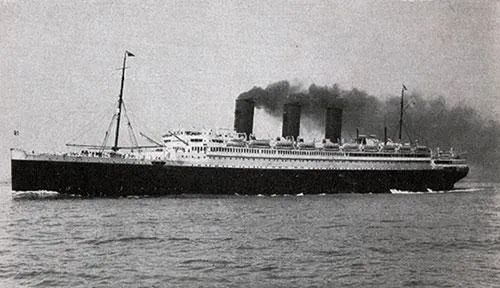
I assumed the ship was packed with refugees, but I was wrong. Eva remembers that many of the passengers were Americans returning from European vacations. Because they traveled third class, her family kept to themselves and didn’t interact with many people.
Eva said at one point she talked with some people from second class, but honestly, her family was in no condition to be strolling the decks. Eva was the only one of the four who did not fall prey to seasickness. (Sadly, one year later, the SS Paris burned while docked in LeHavre, France, and capsized in her berth.)
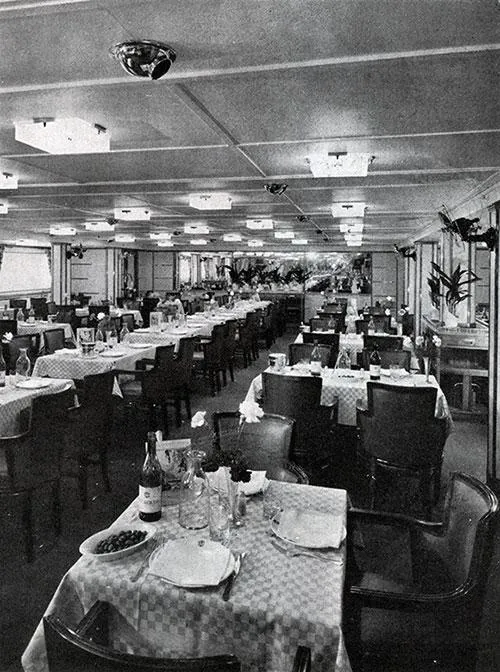
If you were to look at the ship’s manifest from 1938, you’d find approximately 1,930 passengers: 560 First Class, 530 Second Class and 840 Third Class. They all shared the ship - some vacationing and some desperate for a safe new beginning.
At the end of their five-day voyage, they sailed into New York Harbor. I searched the records from Ellis Island and this is what I found:
Berl Eljasz Weissenberg 1938 Age 40
Country of Birth/Poland Ship/Paris
Rebeka Weissenberg 1938 Age 41
Country of Birth/Poland Ship/Paris
Irena Weissenberg 1938 Age 14
Country of Birth/Germany Ship/Paris
Eva Weissenberg 1938 Age 13
Country of Birth/Germany Ship/Paris
After being processed through Ellis Island, the family was met by Berl’s uncle. He had made the trip from Detroit, Michigan to New York City, loaded them all into his car, and headed back home with the family.
The trip required a one-night stop in Pennsylvania. There was no restaurant at the hotel, so in the morning, the girls were sent out to find something the family could have for breakfast. The aroma of fresh bread pulled them into a bakery, just as fresh loaves were being pulled out of the oven. The girls were disappointed to find there was nothing else to choose from, only bread. As Eva recalls:
“We were so hungry, we decided bread would have to do. ‘We’d like some bread,’ we said.
‘This is bread,’ the baker said, pointing at the white loaves. ‘No, we mean bread. We’d like to buy some bread.’
‘This IS bread,’ he insisted.”
“To us, those white loaves looked like cake, because all we had ever eaten was dark rye or pumpernickel bread. We didn’t want cake. We wanted bread! But we bought the white loaf anyway. We were so hungry I don’t even remember if we liked it or not - it just tasted so different.”
Once in Detroit, the family found an apartment in a Jewish neighborhood. It was quite an adjustment for Rebeka, especially. The grocery stores, the meats, the fruits, the vegetables, the variety, the quality! Despite the fact that the U.S. was slowly coming out of The Depression, they could still appreciate the abundance compared to what they were used to in Germany.
With money being scarce at first, Eva’s mother sold the heavy gold bracelets that Eva and Irene had been wearing, and reaped yet another benefit of Berl’s good planning. Extra cash to hold them over.
Yiddish was still primarily spoken between her parents - their English never amounted to much. As for Eva, she was enrolled in a public school in Detroit, where they offered a special one-year class for foreign-born students. Her English improved and she was able to make a smooth transition into the regular classes the following year.
When they were settled, Eva’s father took a job just to bring in some money. In time, he opened his own wool-baling business. After some unfortunate issues with dishonest business partners, he decided to leave it behind, and opened a variety store. Everyone in the family would end up working there in the years to come and it provided them with an income that comfortably supported their life in America.
As the Weissenbergs adjusted to their new home, imagine their joy upon learning that their Jewish neighbors from Berlin, the jewelry store owners, had also escaped, and had settled in the Chicago area. Like the Weissenbergs’ ingenious planning, instead of melting down gold coins for bracelets, they had sewn diamonds inside the handles of their suitcases before fleeing Germany. Another source of valuable emergency reserves. There were happy reunions when the families met over the years.
In recent years, because the Nazis were meticulous with their record keeping, The Holocaust Memorial Center in Michigan was able to provide Eva with information that was heartbreaking to hear.
She learned that Rebeka’s brothers and their wives never made it out. One of the brothers perished with his wife and their two children in Auschwitz. Eva’s Oma and Opa Weissenberg, Chaim and Tamar, moved back to Poland but did not survive. Three of Berl’s relatives safely escaped to Cuba, but sadly, the rest of his family did not survive.
There were good stories and there were horrific stories. Millions lost their lives; some were fortunate and escaped. As Eva reflected on this unimaginable loss, she said, “Those of us who lived to tell our stories are survivors - whether we survived camps, persecution or escapes - we are all survivors.
I will celebrate my 97th birthday on June 28, 2021. I’ve had a good life so far and a good family. So, you see, Sandy? Mine was a good story.”
On that brilliant June day, my son and Eva’s granddaughter stood under the chuppah. A delicately crocheted and embroidered, pure white cloth. At the time I didn’t know its story or the miles it had traveled. But Eva’s mother must have known, on the day she left her home in Berlin, that there would come a time of joy again, a time to celebrate something good.
That day, Rebeka went back into the house and came out with the white table covering, wrapped in a small bundle for safe-keeping. Seventy-seven years later that time of joy came. It was just one of a multitude of reasons to celebrate.
My most humble and grateful
thanks to Eva Kohn
for allowing me the honor of telling
her story.
With love,
Sandy